

AI exploded into every workflow. Tooling got faster. Developers became pickier. And quietly, open source started doing something different, it stopped trying to keep up and started trying to win.
Nonmembers click here
Now as we step into 2026, the pattern is clear.
The projects that matter aren't just "nice alternatives." They're fundamental upgrades. Faster. Simpler. Opinionated. And unapologetically built for how we actually work today.
Here are the open source projects that, in my opinion, aren't just worth watching they're shaping how development will feel in 2026.
Biome
JavaScript Tooling, Finally Rewritten for Speed
For years, JavaScript developers accepted slow tooling as normal. Long lint times. Formatting delays. CI pipelines that felt heavier than the code itself.
Biome changes that expectation.
It's not just a linter or formatter it's a Rust-powered toolchain that replaces ESLint, Prettier, and chunks of your build setup with one fast, cohesive system.
The real shift isn't speed (though it's dramatically faster). It's simplicity. Zero-config defaults that feel sensible. Tools that disappear into the background.
In 2026, teams tired of slow feedback loops will naturally gravitate here.
Bun
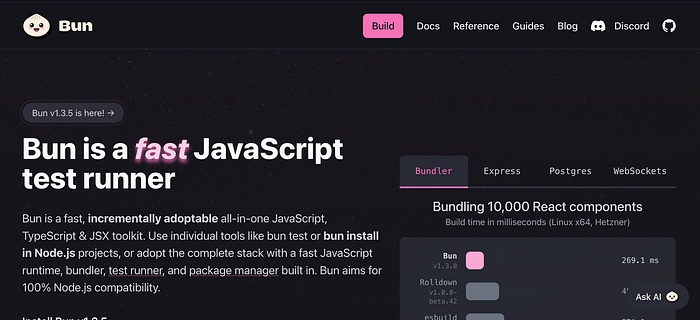
Every few years, something claims to replace Node.js. Most fade away.
Bun didn't.
What started as "the fast runtime" quietly matured into a serious production tool , bundler, transpiler, package manager, and runtime bundled together with performance as a non-negotiable goal.
What makes Bun interesting in 2026 isn't benchmarks. It's momentum.
When teams start migrating real workloads not demos monopolies start to crack.
Deno
Deno never really disappeared. It just stopped trying to compete on hype.
With its newer releases, the platform leaned into what made it different: TypeScript by default, secure execution, and minimal configuration — now without cutting itself off from the npm ecosystem.
In a world moving toward edge and serverless execution, Deno feels oddly well-timed again.
Not loud. Just… right.
Zed
Zed feels like a thought experiment made real.
What if a code editor were designed today — with AI, collaboration, and performance assumed from day one?
The result is a Rust-powered editor that feels impossibly responsive, built for real-time collaboration and AI-assisted workflows without feeling bloated.
It doesn't try to replace everything at once. It just feels… modern.
That alone makes it dangerous.
Turso

SQLite has always been powerful just local.
Turso changes that by treating SQLite as an edge-native database, with multi-region replication and global reads, without sacrificing the simplicity developers love.
This matters more than it sounds.
As applications move closer to users and AI workloads move closer to data the database layer has to follow.
Turso feels like an early answer to that shift.
Ollama

There's something quietly radical about running large language models on your own machine.
Ollama makes that normal.
No API keys. No surprise bills. No sending sensitive code or data to third-party servers. Just models running locally, instantly.
In 2026, the future of AI won't be cloud-only. It'll be hybrid — and Ollama fits perfectly into that reality.
Ruff
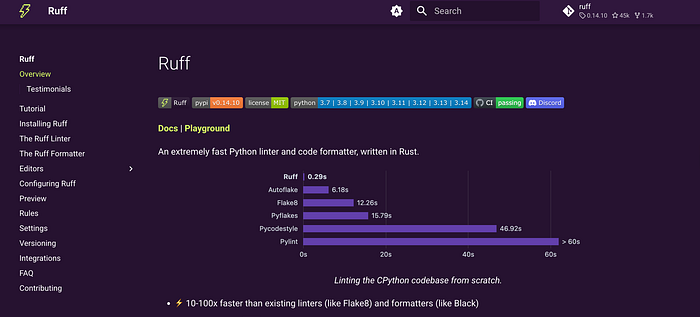
Python developers have waited a long time for faster tooling.
Ruff delivers it aggressively.
Built in Rust, it replaces slow linting setups with something that feels immediate. No ceremony. No endless plugins. Just feedback when you need it.
Once teams experience that speed, going back feels impossible.
Astro
Astro didn't win by adding more features. It won by removing unnecessary JavaScript.
For content-heavy sites — blogs, docs, marketing pages — Astro's "zero JS by default" philosophy feels like common sense that the industry forgot.
As performance budgets tighten and user patience shrinks, frameworks like Astro stop being alternatives and start being defaults.
Continue
An AI Copilot You Actually Control
Continue quietly answers a question many developers are afraid to ask:
What if I don't want my code sent to someone else's servers?
It's open source, editor-agnostic, and works with both local and hosted models. No lock-in. No black box.
In a world increasingly cautious about data, that flexibility matters.
The Pattern Is Impossible to Ignore
Across all these projects, the same themes repeat:
- Performance over tradition
- Developer experience over configuration
- AI that integrates naturally, not invasively
- Open ecosystems instead of vendor lock-in
These aren't incremental improvements. They're corrections.
Why This Matters (Even If You're "Fine" Today)
If you're a developer, these tools will quietly reshape your daily workflow.
If you're a founder, they open opportunities in tooling, integrations, and infrastructure layers.
If you're hiring, familiarity with these projects will soon signal forward-thinking engineers.
The shift isn't coming later.
It's already happening — just without the noise.
Before you go
Pick one project from this list. Star it. Read the docs. Build something small.
That single decision might change how you build software in 2026.
Which one caught your attention? I'm genuinely curious — drop your thoughts below